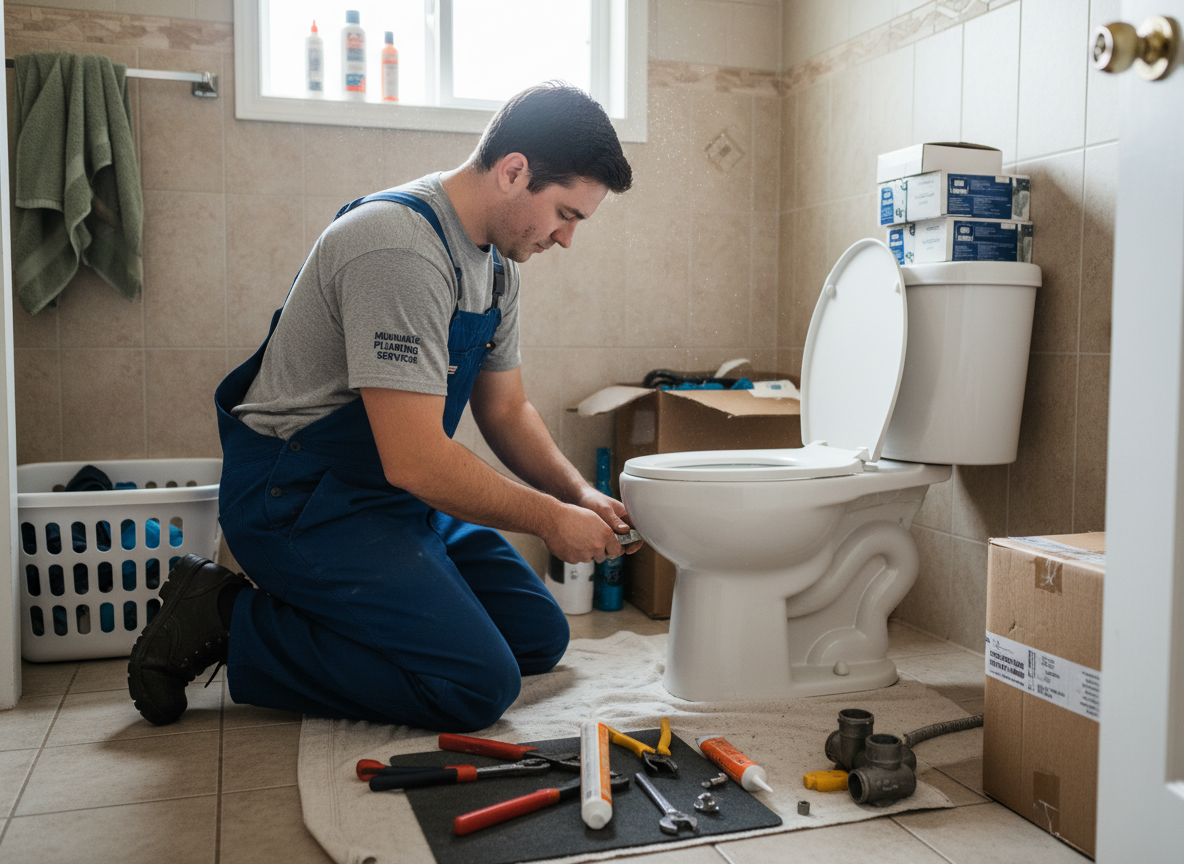
Milwaukie homes built before 1970 in neighborhoods like Ardenwald and Hector Campbell often sit on cast-iron or galvanized lines that settle unevenly after decades of mild wet winters. When a toilet leaks at the flange, moisture migrates into subfloors faster here than in drier climates, turning a simple seal replacement into a floor repair if ignored. We pull the fixture, inspect the closet bend for cracks common after repeated freeze-thaw cycles near the Willamette River, and reset with modern wax-free seals rated for continuous humidity.
Downtown Milwaukie and Island Station properties frequently have low-flow toilets installed during Portland’s early efficiency programs, yet many still leak at the tank bolts because the original rubber gaskets dried out. We carry both 1.28- and 1.6-gallon models with reinforced flush valves that handle the mineral content typical of Clackamas County water without rapid corrosion. Every install includes a new supply line and shutoff to prevent the slow drips that stain tile in these compact bathrooms.
Warm dry summers create their own issue: soil contraction around older foundations can tilt the bowl slightly, breaking the seal within a season. We check level and shim where needed rather than forcing the flange, then test with dyed water to confirm no movement before we leave. This step matters most for second-floor baths in two-story homes common along McLoughlin Boulevard.
Technician insight
In Milwaukie, the thing that catches most people out with toilet repair and installation is the way wet winters keep subfloors damp under 1950s-60s homes in Ardenwald and Island Station. The old cast-iron flange often looks fine until you lift the bowl, then you find the closet bend has hairline cracks from decades of minor settling along the Willamette. We always pull the fixture first instead of guessing at the seal alone.
Leaking Toilet in Hector Campbell Bungalow
Homeowner reported slow leak around the base after heavy winter rain. We found the wax ring had failed and water had reached the subfloor. The original 3-inch cast-iron bend showed minor corrosion typical of the neighborhood. We replaced the flange with a repair ring, installed a new elongated bowl with reinforced bolts, and confirmed no further movement after leveling.
How it works
- 1
Site Assessment
We examine the existing flange, supply line, and surrounding floor for water damage common in Milwaukie’s older stock.
- 2
Removal and Prep
Old unit is removed, flange is cleaned, and any corroded bolts or cracked cast-iron bends are addressed before new install.
- 3
New Installation
Toilet is set with appropriate seal, leveled for local soil movement, and connected with a reinforced supply line.
- 4
Testing and Cleanup
Multiple flush cycles with dyed water confirm no leaks, followed by full cleanup of the work area.
Pricing
Upfront quotes after we see the flange condition and access in your specific Milwaukie home.