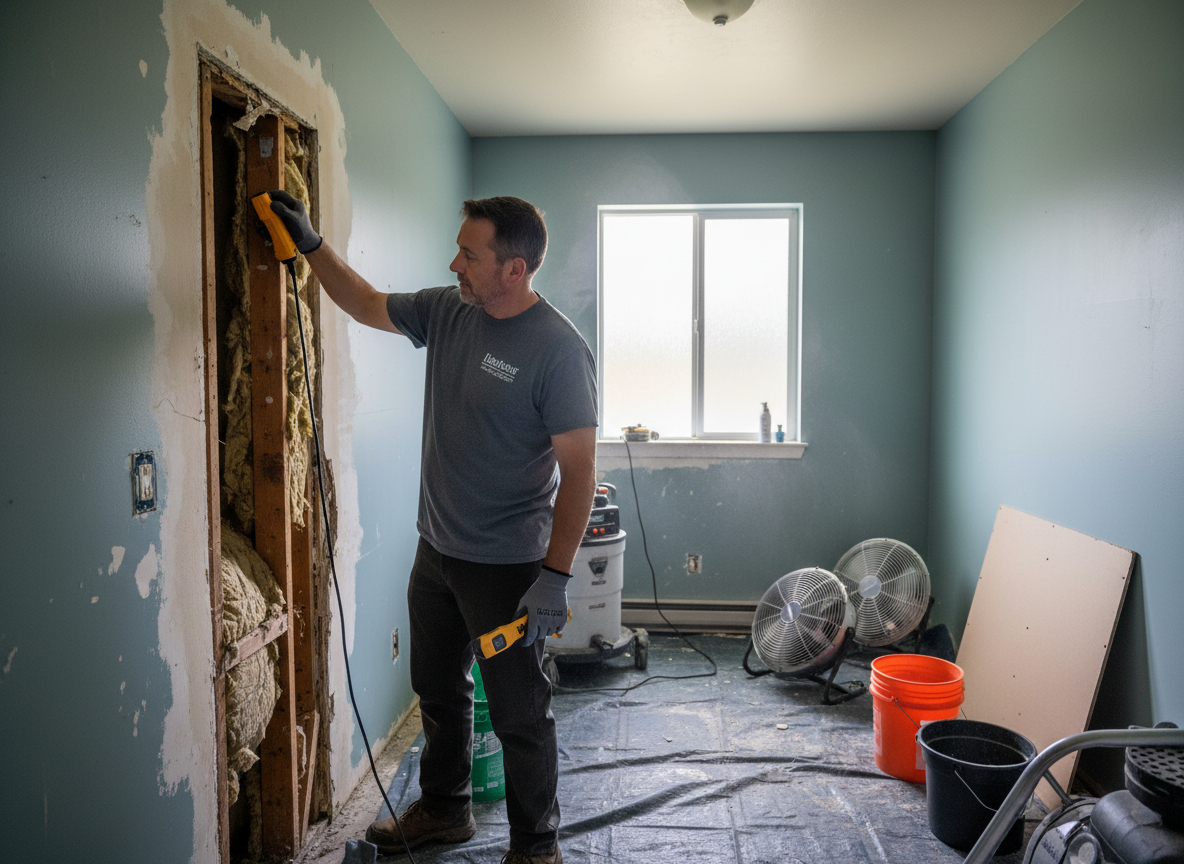
Homes built in the 1950s and 1960s throughout Downtown Milwaukie and Hector Campbell often have cast-iron drain lines and original tile work that trap moisture behind walls once a leak starts. Mild wet winters push these older systems harder, with condensation and slow drips from shower pans turning into visible mold on drywall within a single season. We pull back the affected sections, replace saturated subfloor, and tie new waterproofing to the existing layout without tearing out sound tile that still meets code.
Near the Willamette River and Milwaukie Riverfront Park, soil moisture stays elevated year-round, so bathroom floors on slab foundations in Ardenwald can wick water upward through cracked grout lines. We install a moisture barrier and redirect any perimeter drainage before setting new tile or luxury vinyl. This prevents the same saturation pattern from returning the next winter when temperatures stay above freezing but rain lingers for weeks.
We check for hidden issues in the wall cavities that connect to laundry rooms or adjacent kitchens, common in Island Station layouts. Replacing only the visible damage leaves the source untouched, so we always trace the leak to its entry point before closing the wall. All repairs use cement board and mold-resistant drywall to match what Clackamas County inspectors expect on remodel permits.
Our 24/7 availability from the shop at 17401 SE McLoughlin Blvd means we can stop active leaks the same day a homeowner calls, before water migrates into hallways or downstairs ceilings in two-story homes common around Portland’s southern edge.
Technician insight
In Milwaukie, the thing that catches most people out with water damage bathroom repair is how the wet winters keep older cast-iron stacks in Ardenwald and Hector Campbell homes sweating inside the walls even after the obvious drip is fixed. Homeowners often stop at the visible stain and miss the slow migration into the subfloor that sits right on the damp Clackamas County soil.
Island Station Shower Pan Leak
Water was seeping into the hallway from a 1970s ranch bathroom. We found the original pan had cracked along the drain and moisture had reached the joists. We replaced the pan assembly, dried the framing, and rebuilt with a new waterproof liner before the homeowner noticed damage spreading to the bedroom closet.
How it works
- 1
Initial Assessment
We arrive at the address, locate the water source, and map every affected surface in the bathroom and adjacent rooms.
- 2
Water Extraction and Drying
Standing water is removed and industrial drying equipment is placed to pull moisture from subfloors and wall cavities.
- 3
Demo and Source Repair
Damaged materials are removed, the leak is fixed at the pipe or fixture level, and the area is cleaned of mold.
- 4
Rebuild and Waterproofing
New subfloor, cement board, and waterproof membrane are installed to current standards before finishes go back on.
- 5
Final Walkthrough
We test all fixtures, confirm drying levels with meters, and hand the space back ready for use.
Pricing
Upfront quotes provided after on-site assessment; final cost depends on square footage affected and whether structural repairs are needed.